
Improving Patient Outcomes by Optimizing Practice Efficiency
w/ Audrey Neff of PatientNow
30 minute view/listen


April, 2024
Available everywhere you podcast



On this episode of Next Level Practices, we are joined by PatientNow's Director of Marketing, Audrey Neff.
"Our mission for the industry: bring together what can be a very fragmented approach for practices and make it as streamlined as possible."
As equalizing forces continue to dominate the aesthetic industry, one of the best ways for a surgeon or medspa to stand out from the crowd is to provide superior service to their patients. While it's easy enough to say, making it a reality can be challenging.
Running an aesthetic practice often feels like drowning in a sea of details, difficulties and disasters, while rising above it all can feel like swimming against a riptide.
Audrey Neff of PatientNow says that her company's platform offers a lifeline for aesthetic practices by providing an instant upgrade in efficiency. The complete suite includes an EMR alongside software solutions for practice management, patient engagement, payment processing, digital marketing, and photography.
Finally, TouchMD's photography solutions help create beautiful, consistent images of patients for consultations, before & afters, and even social media and marketing purposes.
One of the features Audrey highlights in this episode is how easy it is for patients to leave reviews: "If you have horrible before and after photos, if you have zero reviews on your Google Business Profile, that is truly one of the biggest profit leaks right now. And it is something that can be fixed relatively easily with the right technology in place."
Find out why creating better patient outcomes is crucial to being competitive, and learn what Audrey has to say about making sure the quality of your service is up to the quality of your practice, on this latest episode of Next Level Practices.
Full Transcript

Max Baybak
All right, so next up I actually have my good friend Audrey Neff, who is the director of marketing for PatientNow, here with us. Audrey, thank you so much for joining us.
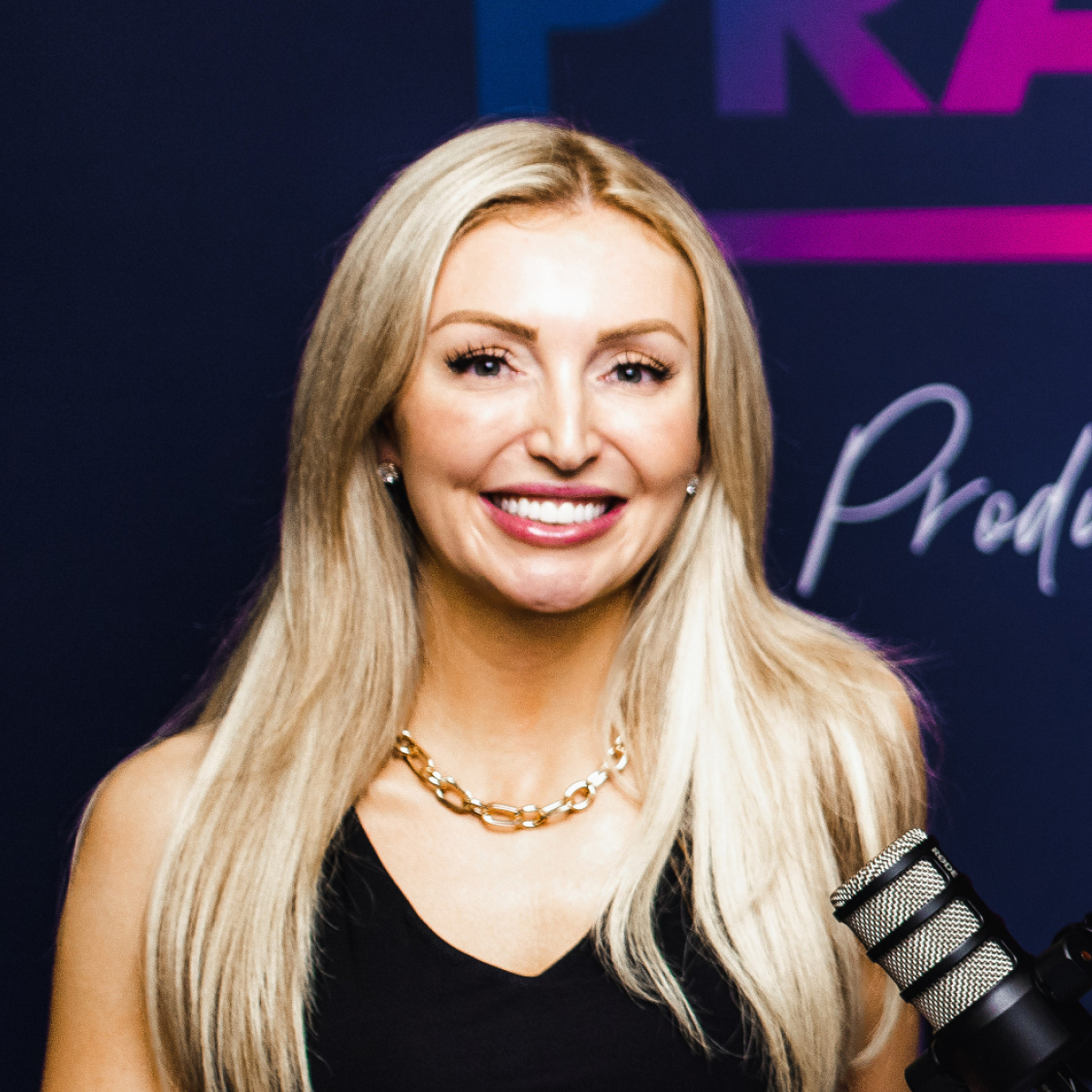
Audrey Neff
Thank you, Max. It is an honor and a pleasure.
Max Baybak
Yeah, it's super fun. I know I said my good friend — I sort of feel like we have these sort of industry buddies that we've met over the years at these shows. We shared the stage several times or had talks on the same panels, so we've kind of become, you know, industry friends. But I think this would be a fun opportunity to get to know more about what you do. I know there's a little bit of overlap in what we do.
Audrey Neff
A little bit.
Max Baybak
I know, slight, slight. And you know, I kind of love that. My whole feeling about the way we should work together in industry, and within the aesthetics industry, is we should just have each other's backs. Maybe there's sometimes when it's directly, kind of diametrically opposed, but for the most part there's just ways we can help each other.
Audrey Neff
Totally.
Max Baybak
So anyway, I just want to talk to you about what you do, who you are, what you do at PatientNow. But will you start off by just — tell us a little bit about your background?
Audrey Neff
Yeah, totally. And before I jump into that — because I total, 110% agree with what you said, that we should all have each other's back, and I think that's something a lot of people and companies in some sense of things can lose sight of. And especially when it comes to our industry, which obviously you and I both are immensely passionate about, and immensely passionate about helping practices reach their full potential, is if we all succeed together. So whether we compete on some small level, if all of the vendors in the industry succeed, that means our clients succeed, and if our clients succeed, the industry as a whole succeeds. So really, we're all in this together.
I think AmSpa uses the term, like, community over collaboration, and I just love that phrase, because it really is so relevant to our industry, which is of course a growing industry. So I had to just say that, because I very much 110% agree. You put it perfectly — when our clients win and we win, then that means we're all winning.
Max Baybak
Yes, yep, exactly. Awesome.
Audrey Neff
So, background. So, as you mentioned, my name's Audrey Neff. I am now the director of PatientNow. I have been in this industry going on eight years, which sounds crazy — I can't believe it's been that long. I started initially, as I'm sure a lot of the industry knows, as the director of marketing for Crystal Clear. We went through a merger back in 2020, which was obviously, you know, a little bit of a chaotic year, if you will, for the industry. So we're PE-backed now — two private equity groups, phenomenal private equity groups. It's been a really, really great experience, and I took over as director of marketing for the PatientNow portfolio.
We recently added RX Photo to our portfolio a couple of years — or, yeah, probably a couple years ago at this point; it seems like a lot longer than that. And our whole mission for the industry is to bring together what can be a very fragmented approach for practices, and really just make it as streamlined and efficient as possible. And I'm sure you and I would both agree that the more efficient a practice runs, the more profitable they can become. So that's kind of been — so that's my role right now. I love it. I'm very passionate about this industry, I love PatientNow. I'm bought into the company 110%. I believe in what we strive for, what our vision is, what our mission is for the industry, and I'm excited to see where it takes us.
Max Baybak
That's great, thank you for that whole background. I do remember — first of all, let me say this: I agree with you, of course, that if you can find efficiencies or you can maximize efficiency, there's always a higher degree of profitability there to be found. But also, I think just in the competitive landscape of aesthetics, which is becoming increasingly more competitive every day, we see a lot of people focusing on that patient experience — both because they actually care, but also that is a really important lever to pull to stay competitive today. And creating a better patient experience with better outcomes is going to be, I think, crucial to being competitive. So yes, make more profit, but also just to really make sure you're competitive today. So the more your systems are working and talking to each other, that's interesting — or that's — the better.
And I think I was very interested when I heard — and I guess you said it was 2020 — when there was the acquisition of Crystal Clear, which you were at.
Audrey Neff
Yep.
Max Baybak
And then shortly thereafter, as you mentioned, RX Photo. And kind of bringing these three things together is intriguing to me. I was curious to see how it would be done in terms of, would it be open? Would you be able to sort of be modular if you were a practice that was using one of those? And I don't know if that's something you can talk about a little bit.
Audrey Neff
Totally. And we are very modular. So do you have to use all of our products? Absolutely not. You can pick and choose. However, a lot of our clients do find, in a lot of aspects of their business operation, it is more efficient, if you will, to bundle them together due to integrations. So for instance, RX Photo, which has been, you know, a leading photo management platform in the industry for a very long time — and it's an iPhone, iPad app, very low-cost, easy to use, it's a phenomenal consultation tool — that is integrated with both our CRM, AestheticNow, which comes with all of our marketing packages, and it's integrated with our EMR, PatientNow, as well.
However, going beyond that — of course, is that the most efficient way to go about it? Sure. But that doesn't mean that clients can't use RX Photo and use a different EMR. So RX Photo additionally has several integrations with other EMRs out there as well. Are they competing EMRs with us? Sure. But once again, going back to that sense of community and collaboration, we're all in this industry together. We're not going to force you to use our EMR if you don't believe that's the best fit for your practice. You make that decision. If you want to use RX Photo with your EMR, that's perfectly fine. So yes, it is modular, to answer your question.
Max Baybak
That's awesome. I think modularity, interoperability, whatever you want to call it, is crucial. If you look at other industries — you know, obviously the technology industry as a whole has really been built today to where all the different SaaS you use talks to each other.
Audrey Neff
Yes.
Max Baybak
And you kind of have to be open to that. But at the same time, of course, if it's all one stack, kind of produced by the same team, developed by the same team, it could be a little bit more seamless with certain integrations. But being able to play friendly with all these other things, I think, is the way to win.
Audrey Neff
Yes.
Max Baybak
Because it can be hard for someone to commit to a whole stack, or maybe they have already got something — it's just hard, too. They want this one piece, they want to move over. But I also — I've always said that the EMR of the future, to me, will have an app store. And I know many do, in essence, but I think it will be as, you know, as seamless as the iTunes or the Apple App Store, and everybody who wants to kind of tap in — it's a little slower, this kind of development, in our industry.
Audrey Neff
Oh, yeah.
Max Baybak
Because, for a lot of reasons — but obviously we're also dealing with sensitive patient information, so it's maybe not the same thing as just, you know, apps on your phone.
Audrey Neff
It is not the same thing.
Max Baybak
However, I think we'll get there, and I think that that level of interoperability is where I see things going. I think you can't fight that — you've got to embrace that. Will you differentiate — tell me, just sort of walk through, I guess, the sort of PatientNow portfolio, as you called it? I'd love for you to tell me a little bit about that more, and then will you tell me what the difference there between AestheticNow and PatientNow was? I wasn't sure if I —
Audrey Neff
Yeah, yeah, absolutely. So we pretty much have four brands under the PatientNow umbrella. So our flagship product is, of course, PatientNow, which has been in the industry 14, 15 years. We actually just reinvested about 3 million back into our technology this year, so we have a ton of exciting enhancements coming down the pipeline, which is very — I'm personally excited about one of them in particular, which will be out here shortly, soon, in the next couple of months. We have a lot of great dev products going on, which is amazing. So that's our flagship product, our EMR — very robust. We have RX Marketing, which is, you know, the services that your typical digital marketing agency would do. Then we have RX Marketing, which does everything that your typical digital marketing agency would do.
And I think it's funny, because when you asked me earlier — you know, we're obviously both here at the Aesthetic Meeting, the ASAPS event — you're like, "Hey, Audrey, do you want to come on the podcast? We decided it's okay to bring competitors on." And I thought that was sort of funny, because I really don't see us as competitors — sure, in maybe some slight sense. I think our marketing offerings are different, I would say. You know, we make the most sense for maybe someone that has a smaller budget, let's say, than Influx. So, you know, I think that we both have the right place for the right practice, depending on their needs and budget. So I really don't classify us as competitors. I classify us as — obviously we're friends — but two companies that are here to just make the industry a better and more successful place when it comes to the marketing side of things.
So we have RX Marketing — so that's pretty much everything that most people would assume when it comes to digital marketing: your website, your SEO, your blog writing, your content creation. It also comes with our AestheticNow CRM. So AestheticNow is not an EMR, it's not a practice management solution — its sole purpose is CRM and marketing. So you can do HIPAA-compliant email marketing, text marketing, you can do your pipeline management, your lead management. It connects back into the website, has call tracking metrics, captures and records all inbound phone calls, which I find to be a very powerful, powerful tool and resource to use when it comes to training your team on handling phones. So that's been very, very helpful for a lot of our clients.
And then, of course, we have RX Photo, which is that before-and-after photo platform, iPhone, iPad app. It's a phenomenal consultation tool. So I typically — it also, actually, going back to the photo aspect, it really ensures that all of the practice's before-and-after photos are consistent every single time. And I feel like this — we actually did a consumer analysis with Google — we paid Google a lot of money — this was about a year or two ago, on the RX Photo side of our business. And we basically surveyed 1,000 millennial consumers who were researching aesthetic treatments, cosmetic treatments online, and there was a series of questions that we asked in the survey. The two that stood out to me the most — well, one in particular, but I'll go into both. So the first was, in terms of — let's say you're on a website, okay, a practice's website, you're researching providers and treatments — what are the top two pages that typically interest you the most? And I'm sure — this is things that we would both agree on, but it was evident, evident in this survey as well: the reviews page and the before-and-after photos —
Max Baybak
Gallery.
Audrey Neff
Yeah, exactly. And the second — or, I'm not — sorry, not the second, but the third or the fourth was the credentials. And I feel like in this industry, a lot, typically with core — and I don't want to throw shade at anyone, but it is common — is, you can be the best surgeon in the freaking world, you can be the best injector in the United States of America, and if you have horrible before-and-after photos, if you have zero reviews on your Google Business Profile, that's truly one of the biggest profit leaks right now. And to be honest, it's something that can be fixed and tweaked very easily, just with internal processes and, of course, the right technology to help you with that.
So with RX Photo, that really solves that gap of consistent before-and-after photos. Because if we are talking about before-and-after photos, and — you know, let's just say it's a facial procedure — and you have the before photo, it's phenomenal, great lighting, and then the after photo — maybe they did get a spectacular result, but the lighting is off, the angles of the face are different, whatever it may be — it's not showcasing what that result is. So if I'm looking at that photo as a consumer, am I impressed? Probably not. However, if we were to compare this to a practice who maybe was, let's just say, not as good as an injector — and this is the reality we live in, unfortunately — yet they have better before-and-after photos and they have 10 times the amount of reviews as you, I'm going to choose to go there. So it is a profit leak. It is something that can be fixed relatively easy with the right internal processes and technology in place. But on the photo side, that's where RX Photo comes into the market, to fill that gap.
And then on the review side, we actually have a really cool integration and add-on — Advanced RX Marketing, or Advanced RX Photo package, I would say. And we actually provide integrations with a company called Swell. It's integrated in our CRM system, so it helps streamline that reputation management. It comes with an integration with Canva, which I'm sure we all love. I live and breathe Canva — I love Canva. So it comes really good — it has — I mean, who needs Photoshop anymore? You can just use Canva. So I use Canva every day. So with the Canva integration through RX Photo — when you're in RX Photo as the provider, and your patients are signing their consent forms — and everyone should have, of course, before-and-after consent, and that should be separate to the social media consent. Because everyone — you need to have the before-and-after photos in there, whether the patient doesn't want them on social or not; you still need to delineate the importance of having them for the practice, and for the patient to monitor their progress over time, of course, because some people are really, you know, of course, weird about it or don't want their photos taken.
So on one front, that. On the second front, social media consent — with those who give social media consent, you can actually push those before-and-after photos directly into your Canva account. So when you go into Canva and you want to create some content, all the before-and-after photos are already there of patients who gave social media consent. So I think that has been a really cool addition to RX Photo. Our clients certainly like it. It comes, of course, at an additional cost, but it does give those extra features that really help on the reputation management side, and then of course the social side and the before-and-after side. That's a — that was a little —
Max Baybak
No, it's a whole lot. It really helps me understand even better, and especially how you've integrated some of these things that have been acquired over the last few years. And like I said, there are times when, if you can kind of buy into the whole ecosystem, you get the advantage of certain more seamless things. I do think sometimes it's incredible, when I can click a stock photo in Canva, just how much more seamless my workflow is versus having to go out and get it, download it, and bring it in. And that changes a lot — that small, seemingly small thing can make a big difference.
What you said — and I knew you were kind of getting at the core there for a second, and I know exactly what you're talking about, because we work with the core, we work with, you know — I would like to think, you know, the best of the best in aesthetics and in plastic surgery and medical spas across the country. But there are the times when some people say, you know, "I have the credentials and they should really be coming to me," but someone comes along who's just better at marketing, sadly. Let's call a spade a spade.
Audrey Neff
Totally.
Max Baybak
And it's not great that the patient may then be misled by the razzle-dazzle of the marketing, but you need to make sure your marketing is up to par, and that means photos. I would say, for us, on your actual website, the gallery is the number one. Now, reviews offsite, yes — you know, we can't always have insight into those across all the different platforms — reviews and photos. But on your website, it's the photos. And to clarify something you said — you have bad before-and-afters, but we're not talking about the result of the work or the surgery; we're talking about the quality of the photo itself, whether that's the lighting, or inconsistency of framing, one to the — the before to the after, or —
Audrey Neff
Yes.
Max Baybak
— anything else, the cropping, etc. We have all kinds of trouble trying to kind of educate folks on why we can't necessarily get these to look consistent, because they were shot incorrectly. And we work to build systems to make that really seamless. But, you know, some of our top-performing websites have, firstly, very robust galleries, but they're all consistently taken, and then excellent results showcased. It's sort of the framing of that excellent result, and you don't do it justice if you mess that up, or if you're not taking that time to do that last little bit — which is, it's honestly very difficult to do it right. But if you have the tools — it can be tedious, but if you have the tools, it can be really helpful.
Audrey Neff
Yep.
Max Baybak
What do you see in terms of the difference — do you have a lot of — let me ask it this way: do you have a lot of nonsurgical clients using RX Photo? Because I see, obviously, ours are embracing non — they could always probably do more before-and-afters, but that's pretty common, that they're getting the consent and they're showing it in their marketing, website, internal, social media. But it's much less consistent across medical spas, in terms of whether they're even really making a strong effort to do before-and-after pictures. I see many that are, I see many that aren't. It depends on the procedure, too — some are a little bit hard to capture the differences in, in before-and-after photos, or you're not able to get them back at the right time. But is this something that you have a lot of those type of clients?
Audrey Neff
Oh yeah, oh yeah. And it's funny to think about this industry as a whole — of course we have the surgical side and then the non-surgical side, but that non-surgical side, so med spas, is growing exponentially. Our client base on the med spa side is growing faster than it is in plastic surgery, naturally.
Max Baybak
Yeah, naturally.
Audrey Neff
And I would — the majority of our clients on RX Photo — we have a mixture. We have a lot of franchises, we have a lot of franchise clients as well. So we have a lot of franchises that implement RX Photo throughout their entire — all of their locations have to have RX Photo. It's something that, you know, as a franchisee, they, you know, are going to invest — or they advise their franchisees to invest: this is the before-and-after photo software that you have to use, because this is what is going to assist your marketing and your consultation process in the best way.
So on the med spa side, of course there are med spas that are not using software, just using their phones, let's say, and that's fine. If you don't want to invest in software, that is A-okay. My advice to those practices would be, if you're going to do that, you still need to make sure that your photos are as consistent as possible. While that's a little bit more difficult when you don't have a tool to help you — so for instance, in RX Photo there's viewfinders with different phases of every single angle that has to be taken. So whether it's body, whether it's breast, whether it's face, whether it's lips, there is a full series of angles that you have to hit, and it matches it up to the patient's face every single time, so you can't go wrong.
Max Baybak
That's such a helpful guide.
Audrey Neff
Yeah, dummy proof. Dummy proof, literally. So for that — that's very helpful. If you're not using that, obviously you should be making sure — and this is a big thing I see — have that documented process in the practice of: when we are going to take before-and-after photos, what does this process look like? Is there a special place in the practice that we are going to take them? What does that place look like — black wall, blue wall? Do we have — some of our clients actually have some, like, step pads that they like to use. Do we have the right lighting? A lot of our clients really like the GlamCor lights — very low-cost lights to use as well. So if you do those things — obviously with RX Photo it's easier, but could you do it with your iPhone? Sure. But you're not going to have that patient portal, where the patient can sign in and view their progress of their treatment plan over the last 12 months.
And you said something about how some treatments are a little bit more difficult to showcase, and I totally agree with that. Like, let's try to think of it like Sculptra, okay? Let's say something that's a biostimulatory filler. After doing it once, the patient's going to look super swollen — obviously that's not the final result. A couple weeks later, it's going to look like nothing was done. But if they continue that series of Sculptra, let's say, over time — whether they need three vials, four vials, five vials — waiting until, you know, that last vial is complete of that series of Sculptra, and during that process taking before-and-after photos every single time. And then when you start from, let's say, from A to where they end at the end, and showcasing those as the before and after — versus, this is what you look like before one vial of Sculptra and this is what you look like after the second vial, maybe there wasn't a huge difference.
So just making sure that you have that documented — I feel like that's, like, the first thing that would come to mind of something that's very, very subtle, and you don't really see much results until you finish your series, and of course you have to keep up with it. So just being mindful of the treatments you're performing, when final results are, when you should be showcasing the before-and-after photos — and of course, knowing that treatment timeline is great for your social media strategy: we're going to hold off on this until, you know, we have this patient finish their fifth vial of Sculptra, let's just say. So when it comes to that, that's kind of my insight, I would say.
Max Baybak
Yeah, well, no, it's interesting to hear, and I'm glad to hear that you have a lot of medical spas embracing — like I said, we do too, but it's just less consistent. And sometimes there's also weird things where maybe it's, I don't know, some kind of removal or something, or a scar treatment. And I think it's so funny, because sometimes they don't know where to shoot — it's not as easy as just saying, take, you know, turn, rotate 90 degrees — and they'll just kind of be zoomed in on this one patch of skin with no perspective around it. You don't know what to do; it kind of looks funny.
But you know, it's funny — this is a bit of a leap from what we were talking about, but you were talking about knowing the process of the procedure and when the right time, cadence, and timing is. But it reminded me of something that you — I think at the last talk that I saw you give, might have been in Park City back in February at ABAM — you were talking about reviews and the timing of sends.
Audrey Neff
Yes, yes.
Max Baybak
Because it correlates to that very similarly. Whereas, like, I've seen a lot of these — Birdeye, you know, a dental review program system that people adopted in aesthetics, and they try to send out these review — let's call them —
Audrey Neff
Solicitations.
Max Baybak
Yeah, I was going to say solicitation, yeah, exactly. For, "Hey, we'd love for you to write a review, tell us about your experience." They try to do it on the same cadence as dentistry, and it falls apart. And so it's also — I don't know if you have any comment on that.
Audrey Neff
Yeah, I do. So when it comes to reviews, just like everything, there has to be a strategic strategy around it. So going back to the ABAM talk — if you bring on a reputation management software in your practice to assist through automation of technology, that's great, okay. You also just need to make sure that it's categorized, let's say, or timed, based on treatments and procedures received. So as we all know, we are all in this industry — some of us do surgery, some of us only do non-surgical and non-invasive procedures. Regardless of that, every treatment has a different timeline of final results.
So if someone's coming in for — let's do something super simple: tox, okay. That's phenomenal — we all know it takes about 14 days. Let's say they're coming in for filler — okay, maybe we want to wait two to four weeks until, you know, the bruising, the swelling goes away, we have a final result. Surgery — we don't want to be — so if you're using the same system for your reviews for surgery and non-invasive procedures, and let's say someone comes in for a rhinoplasty or a bleph, whatever it is, and it's sending them a review request the next day — of course, when they're feeling probably unwell, on medication, and maybe even regretting their decision, because, you know, some patients can go through that arc — "Hey, it was so nice to see you, uh, you know, yesterday, Susan. Would you mind leaving us a review on Google?" And you're freaking on the couch, like, "Oh my gosh," like, just not feeling good at all. That's tone deaf, I guess I would say.
So just being mindful of that. You have to have the right technology in place, but making sure that it is really categorized based on treatment or procedures received. And a lot of the systems out there, such as Swell — in our Swell integration, our practices are able to do that. So review requests are tailored based on the treatment or procedure received, and it will recognize, if they receive treatment XYZ, I will ask for a review this number of days, weeks, months later, whatever it may be. So that's something that's been very helpful.
Max Baybak
That's awesome. Okay, I just have — first of all, so she was referencing the talk that I saw her give in Park City at the American Brazilian Aesthetic Meeting, Dr. Saltz's show. And if you do get a chance to see Audrey speak, I want to say she's a fantastic speaker and has a lot of amazing insights. So before we wrap up here, we'll find out how people can stay abreast of the coming speaking engagements that you have. But two more questions, because I know you're busy and you need to get back to many other things you're doing here. There's a lot in this product catalog that you brought up — portfolio. Do you guys offer any kind of a training component, or what does that onboarding look like, to help people with all of these things?
Audrey Neff
Oh yeah, yeah. Anytime a client signs up with any of our products, there is an onboarding process. Obviously, depending on the product, some are lengthier in time. So PatientNow, it's typically about a month onboarding process — reason being is that we customize the software to your practice. So you have an implementation specialist that basically holds your hand throughout that time span of that 30, 40 days, where they're onboarding the practice. When it comes to RX Photo, let's say, it's a very user-friendly iPhone, iPad app, so that onboarding looks a lot quicker. So yes, in any of our products, whatever you sign up for, you're not going to sign up for something and then it's like, on you. We have a team — implementation, support, and training team — for each aspect and product of our business.
Max Baybak
Excellent. Yeah, I assumed as much — I never asked you that, actually. But it's such an important piece of selling any kind of a SaaS or software system.
Audrey Neff
Oh yeah, absolutely.
Max Baybak
Okay, and then, you brought up that you don't view us as competitors, and I think that goes back to what we started on this show talking about — which is, in this interview — which is, there's a whole ecosystem, right? So there's different — and if you understand that people are at different sizes and stages and phases, and you need different things to serve them, and no one company's going to serve them all — and I think that's a really important piece of that understanding. Will you tell me a little bit about — and I realize it's not just one kind of type of practice, but a little bit of the range of a practice that is the right kind of good fit for PatientNow?
Audrey Neff
Yeah, totally. So we have — it can be a various range, let's say. So typically, obviously, cash pay. We do have an insurance integration with PatientNow — if you are doing less than 30% of insurance and you're a plastic, you can use PatientNow. So we do have that insurance integration; a lot of our plastics, of course, use that. On the med spa side, obviously they're all going to be cash-based. So really, as long as you're a cash-based practice doing less than 30% of insurance billing, you're a great fit for PatientNow. Of course, that also boils down to what your budget is.
We do see a lot of — let's talk about nurses, for instance. You know, we're seeing this huge wave of nurses leaving the hospitals, and maybe they want to go become an injector, work in a med spa, be an entrepreneur, open up their own med spa. And so they come from the clinical world, and now all of a sudden they're thrown into the world of being a small business owner, and the cost of software and marketing and all these things that you need to do to be successful totally freak them out. And as PatientNow — are we the cheapest EMR software in the industry? Of course not. Our pricing is based on our functionality and how robust our EMR is.
So there are practices who come in and they're like, "I don't want to spend $399 a month on software. I'd rather go buy this other software for $25 a month," let's just say, as an example. Then they're using, you know, kind of comparable software to, like, a hair salon or that kind of stuff. In those cases, the challenge they run into is, when they do start to grow, those softwares are difficult to grow and scale with. So the reason our PatientNow clients stay with PatientNow is because as they grow, as they scale — so this is kind of a future thing that we do, you know, talk to our potential prospects and clients about — is, if you intend on growing in the next five years, you're going to need to invest in a software that grows with you. So as long as you're a cash-based practice, to be honest, you're a fit for PatientNow if you're in this industry. Of course, that goes down to what your budget is, what you believe your business finances are, and our team always will sit down and go through that with you as well during our sales process.
What also, building on that — not just aesthetics. We also cater to anti-aging, age management, wellness, IV therapy. We do have a lab integration with PatientNow as well, so a lot of our clinics that have IV therapy, or they need to send labs, or wellness clinics and things like that — those are also practices that are great fits for PatientNow, because of our lab integration as well. So we do serve kind of cash-pay, elective medicine. We have a wide range, I would say — predominantly it's definitely med spa, with plastics being second, but that age management, that anti-aging sector is growing exponentially as well.
Max Baybak
That's awesome. That's really helpful for me to kind of understand — and hey, if we have some people that fit that bill, we'll send them your way, now that I better understand it. I kind of had a rough idea, but that's really helpful. Okay, so last but not least, where do people go to learn more about PatientNow, and where can they kind of follow you and stay up with what you're doing?
Audrey Neff
Yeah, totally. So PatientNow — we have our website, so www.patientnow.com, as simple as that. Go to the site, fill out an online demo form, and someone will get in touch with you. In terms of myself, I am most active on LinkedIn and Instagram. So my Instagram handle is just Audrey Neff, and then LinkedIn, of course, you can search Audrey Neff. But those are the two media platforms that I am most active on.
Max Baybak
Awesome. Well, you heard it — go follow her and continue to learn from — she has great insights that y'all need to hear. Audrey, thank you so much for joining us. This was a lot of fun.
Audrey Neff
It was a pleasure.
Max Baybak
Awesome.
Audrey Neff
Yeah.
Subscribe to Next Level Practices
Next Level Practices is the show where we discuss the ever-changing world of digital marketing and patient acquisition and bring you the latest ideas, strategies, and tactics to help you take your practice to the next level.